
Supporters Like You
Read about supporters like you who share our mission, our compassion, and our success in creating sustainable, positive change in our communities.
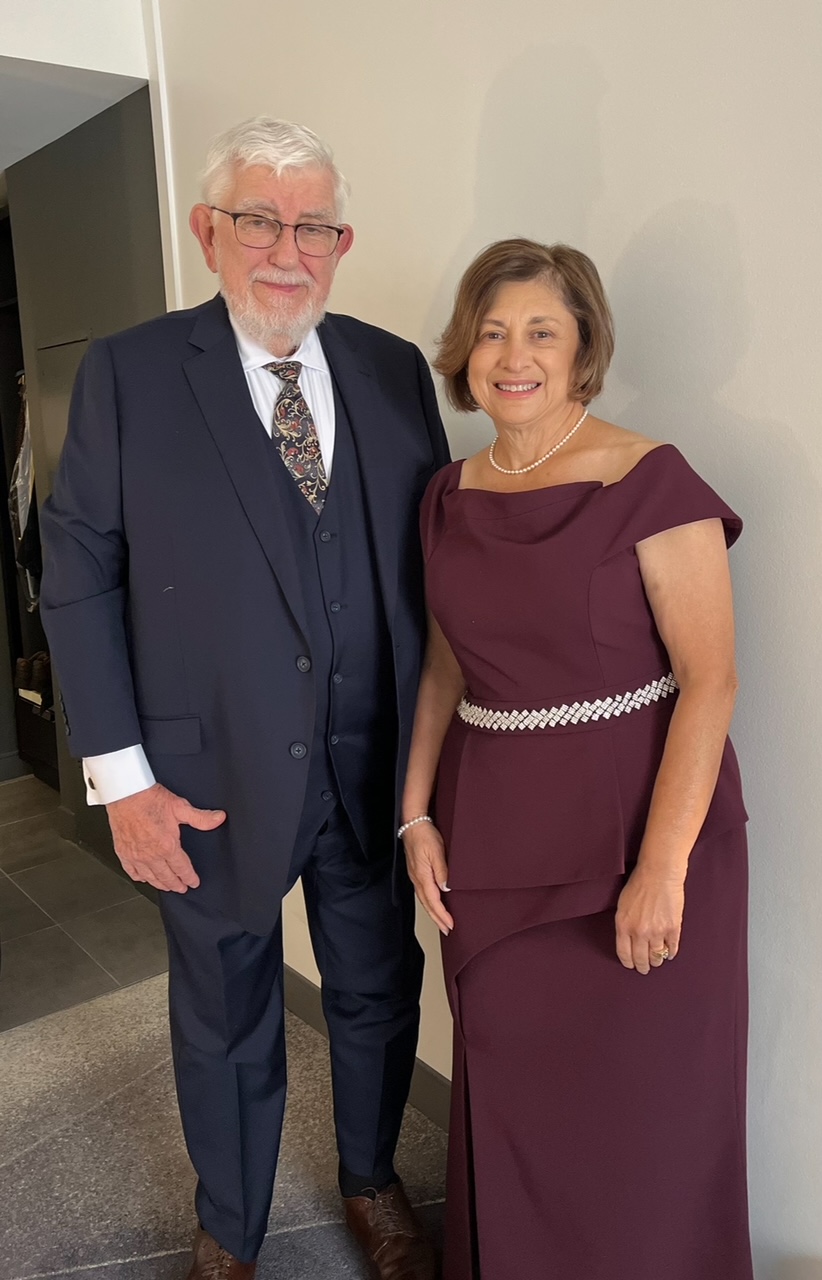
John Wineland
Read more of his story
Where are you from, John?
I was born and raised in Altoona, PA. My father’s family goes back many generations in the local farming community. There is a “Wineland” street in Martinsburg. My wife Paula is also from western Pennsylvania – Greensburg, closer to Pittsburgh.
Then how did you end up in this neck of the woods?
I came to Philadelphia in 1969 to pursue a Ph.D. in history. I fell in love with both history and Philadelphia and decided to stay.
After working as a director of undergraduate admissions at The University of Pennsylvania, I moved into law firm administration and ultimately worked at Drinker for many years. I retired at 70 in 2010 as Director of Practice Group Administration. By then the firm had 700 lawyers, 16 practice groups, and 12 offices.
How did you get involved in ECS?
I was raised as a hardcore fundamentalist in an independent Baptist church. Its mission was exceedingly insular. After college in the early 1960’s I converted to the Episcopal church and was highly active as a lay minister in the Chicago diocese. I recently read Bishop Budde’s (Washington, D.C.) book How We Learn to be Brave. She speaks of that transition – moving from an evangelical internal focus to the larger world. Given my background, I had so much to learn about the “real world” – but also how limited we are.
And you eventually joined the ECS board?
I wanted to serve in some meaningful way. Spencer Wright, an early pillar of ECS from the 1950’s, and a very generous supporter, was a business contact and friend. He set up a lunch with then Executive Director, Bob Betts. It was an instant friendship. I joined the Finance Committee, then the Board of Trustees. When it came time for Ray Welsh, Board President to rotate off the board, Betty Cecil, a fellow Trustee, nominated me and asked me to stand for President.
Did you aspire to be Board President?
Clearly not! I was thoroughly intimidated and awed by the question – and by the notion that Bob Betts was going to retire. But my ECS years became among the most meaningful in my life – including the sense that we were not only making great strides to help individuals in need, but also trying to address and develop remedies for the underlying problems. I remember how excited we were the day we approved the purchase and rehabilitation of St. Barnabas. I also remember visiting many local churches and after-school programs and collaborating with dedicated staff who’d had years of experience and knowledge. Bob was a true professional in social services and taught me much. We attended the national conference of the Child Welfare League in Washington, D.C. together. I visited many parishes for “ECS Sundays” – and was encouraged to see the ECS mission so widely accepted. Indeed, ECS does address important issues.
Overseeing the transition of Executive Directors at ECS while I was Board President was a big job. My wife and I were both juggling demanding careers and we had a young child at home at the time. Fortunately, John Midwood, who had been Associate Director, quickly assumed the reins and did a superb job as leader. My Board President successors, Cliff Kozemchak, and Kurt Brunner were more than ready to take over.
Some of ECS’ programs have evolved since you were on the board. How do you feel about that?
Yes. ECS is much different today but still provides strong and creative leadership in the realm of reducing poverty. Philadelphia is the poorest of the ten largest cities in the US. Why is that? How and what can we do about it? It has been exciting to watch successive boards and staff take up these issues with fresh enthusiasm, new strategies, and determination.
What would you say to others considering supporting ECS?
The social work ECS provides to those in need can only happen with the support of a strong donor base. In addition to our yearly contribution, my wife Paula and I made a decision some years ago to join the City Mission Legacy Society—ECS’ planned giving society. For those who are able, we encourage all dedicated supporters to consider doing the same
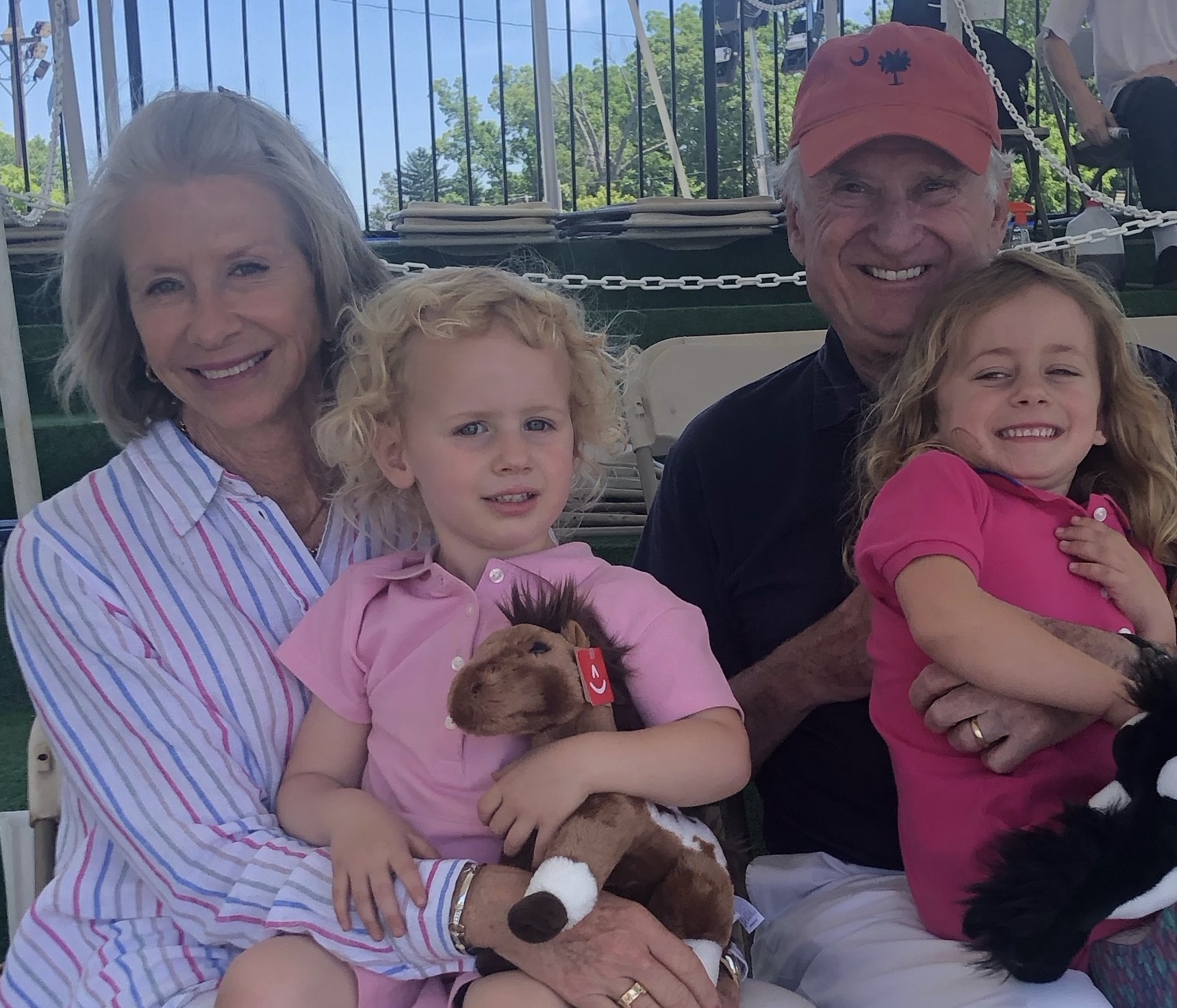
Nina Milton
The church has always been an integral part of family life. From youth group activities to her own personal journey with faith, Nina’s story is woven with family ties and a love for service
Read more of their story
A Legacy of Faith and Giving: Nina Milton’s Story
Nina Milton (née Lander) grew up in Wayne, Pennsylvania, where her family’s deep connection to the Episcopal Church shaped much of her early life. Her grandfather was the long-serving rector of the Church of the Good Shepherd in Rosemont. However, St. Mary’s Episcopal Church in Wayne, Nina’s home parish, is where many of the Landers have worshiped over the years. In fact, her grandmother used to joke about counting how many of her grandchildren were at St. Mary’s altar for communion on Sundays. The church has always been an integral part of family life. From youth group activities to her own personal journey with faith, Nina’s story is woven with family ties and a love for service.
In the 1970s, Nina’s understanding of the world began to broaden. She recalls an eye-opening experience with her church youth group, visiting St. Barnabas, a place far removed from the familiar comforts of suburban Wayne. This was a pivotal moment that sparked her awareness of the disparities in society, a realization that grew deeper over the years.
Nina’s family had always supported Episcopal Community Services (ECS), though it wasn’t something she paid much attention to at first. It was simply part of the fabric of church life—like the blue UTO offering boxes and the Forward Day by Day booklets. As an adult, Nina followed in her family’s footsteps by engaging consciously with giving, including donations to ECS. As Nina became more financially independent, she started giving more consistently, even if the amounts were small.
Eventually, Nina’s life took her away from Pennsylvania, leading her to South Carolina. Despite the distance, Nina remained connected to her parish and her family’s traditions. Over time, Nina signed on to be a member of the City Mission Legacy Society, a decision she made to ensure that her giving would have a lasting impact beyond her annual contributions.
To Nina, giving is not about being in the spotlight. She describes herself as someone who prefers to work quietly behind the scenes, washing dishes at the church’s soup kitchen or offering a helping hand where needed. But her philosophy is clear: “We are all a few bad decisions and bad luck away from the people ECS helps.” She believes deeply in the ECS mission of breaking the cycle of poverty, not just offering temporary relief but fostering real, lasting change.
Nina’s story serves as a reminder that philanthropy isn’t reserved for the wealthy. As she puts it, “I’m just a regular person. I can’t give tens of thousands of dollars every year, but if I can do something that makes a difference in the end, then I want to do it.” For Nina, giving is a way to express gratitude for her own good fortune and to help others on their journey toward a better life.
Her journey with ECS, from those small early contributions to her commitment to legacy giving, exemplifies the power of quiet, consistent generosity. It is a testament to how every bit helps, and how, over time, even modest donations can contribute to significant change.
Larry and Marianne Dahl
“We had so much that had gone well for us—so much had gone right in our lives. We thought …we can’t ignore poverty anymore. We need to respond,” shares Larry as he describes how he and Marianne first became introduced to ECS.
Read more of their story
We are all Interconnected. We are… Community.
As many followers of ECS know, Community is one of our 4 core values. The Holy Spirit has a way of working through Communities, through our interconnected nature, silently accomplishing things that go beyond the sum of our individual parts. This is one of those stories.
After 2 years at Temple University and 4 years with the U.S. Air Force, Larry Dahl was ready to settle down. When he met his future wife Marianne through mutual friends it was love at first sight. Thankfully, the feelings were mutual. Marianne, a highly accomplished young woman with a blooming career in Occupational Therapy agreed to marry Larry in a small wedding at the former Church of the Resurrection in Mayfair. The year was 1978.
By the mid-80s the Dahls had one son, Kurt, and were in the process of adopting a second. “Once I had two children, I knew it would be important for me to be able to provide them the same beginning that I had,” Larry shared. They set out to find a church in Central Bucks County that was welcoming to small children. “We began attending Good Shepherd Episcopal Church of Hilltown in the late 80s. Our adopted son, Philip, joined us in 1988 when he was 3 years old. Philip was well known in the congregation for roaring out ‘and God be with you!’ to Reverend Frank Toia’s utter delight.” The Dahls had found their spiritual home.
Larry and Marianne relished their years at Good Shepherd under Reverend Toia’s pastoral care. Both joined the vestry. Larry was acolyte master and taught Sunday School to teens. Marianne taught Sunday School to the congregation’s youngest children. Reverend Toia was much loved by the community, bringing warmth and great fellowship to the congregation. He was also well known for expanding the parish’s horizons, creating genuine ties between people of all backgrounds. “Frank was a big advocate for women in key parish roles as priests and deacons. He brought diversity into the church. He would host Jewish guests, Muslim guests… It was a good place for us,” Larry reflected.
One day, Reverend Toia invited Virginia (Ginger) Goodrich to speak. She was serving as a member of Bishop Bartlett’s staff at the time and is a parishioner of St. Thomas’ Church, Whitemarsh. Larry recalls her presenting on the topic of tithing and how ECS was a charity close to her heart. “When she came in, her story was so powerful,” Larry said, welled up with emotion. “We had so much that had gone well for us—so much had gone right in our lives. We thought …we can’t ignore poverty anymore. We need to respond.”
“Ginger only came and spoke that one time, but when you’re spreading the good word, it works in a flash!” Larry interjected with a smile.
Eventually, Reverend Toia retired, the Dahl’s children grew, and Larry and Marianne moved over to St. Matthew’s Parish in Maple Glenn, yet the Dahl’s engagement with ECS and the lessons they learned from Ginger that day remained. In addition to their charitable contributions, Marianne offered her services as an Occupational Therapist to ECS staff and participants. When she started teaching at Philadelphia University (now TJU) she infused her ECS experiences into her work. Marianne was a fierce advocate for creating pathways for minorities to enroll in therapeutic training programs. She launched a hugely successful Occupational Therapy Assistant (OTA) training program, popular with adult-students seeking sustainable, rewarding careers.
Reverend Frank Toia served as Rector of Good Shepherd from 1979 to 1999. Once retired he devoted more time to his ministry with the diocesan companion relationship with Guatemala and visited there many times. This was a defining experience of his life. He passed away in June of 2019.
After a brave 4-year battle with cancer, Marianne passed away on Good Friday, April 2, 2021. She was 71 years old. Survived by her loving husband, Larry and their two sons, Marianne’s legacy is one of service to others, deeply informed by her faith and spiritual practice.
While time marches on and peoples’ circumstances change, the Holy Spirit continues to move through those who remain. Larry Dahl, Linda Toia (the late Reverend’s wife), and Ginger Goodrich all remain engaged with ECS to this day—each supporting the cause to improve the lives of those struggling with poverty in our region. Each interconnected. Each part of our ECS Community.

Jean Tinney Evans
There is an expectation that people in poverty ought to be grateful for anything they receive. Jean thinks differently, stating, “We need to appreciate more, the people who are receiving our assistance.”
Read more of her story
It was Christmas Day, 1949 when Jean Tinney, a sixth-grader from Collingdale, Delaware County, walked several blocks over to her friend Betty’s house to deliver her a small gift for the holiday. Betty was a classmate of Jean’s living in a home with an older foster care provider, a woman she called grandmother. This was Betty’s fourth or fifth foster home in her young life. Jean was disheartened when she found Betty, on this special day, not celebrating at all, but scrubbing the bathroom floor. “It’s what I have to do,” Betty told her. “It isn’t right,” Jean exclaimed to her parents when she returned home. That spring, Betty’s “grandmother” passed away at which point Betty was sent to stay at the Burd School, an orphanage for girls on Baltimore Avenue.
The Burd School for Girls was one of several small human service agencies of Episcopalian lineage in Philadelphia that would eventually be folded into the ECS family, which explains Jean’s connection to ECS to this day.
As the weeks went by, Jean—who was an only child—petitioned to her parents to let Betty come live with them. “I must have been very convincing,” she said, “because my parents went through the process of contacting [the Burd School] to become foster parents.” In the summer of 1950 Betty came to stay with the Tinney’s for good.
Jean thought back on growing up with Betty. “She had a hard time adjusting and adapting due to her experiences before she came to live with us that had informed her life. It was no fault of anyone’s,” she explained. Betty’s birth mother would not agree to anyone formally adopting Betty. But Jean’s mother was committed, nonetheless. No matter the challenges—and Betty could be difficult at times—the Tinney family devoted themselves to Betty and considered her one of their own.
Betty continued to receive support from the orphanage until she reached adulthood. Jean recalls a kindly woman named Ms. Knapp, a social worker with the agency, who would visit Betty from time to time. Ms. Knapp made an impression on the young Jean, both for her wins and her misses. “Ms. Knapp tried so hard to be a friend to Betty, and all the foster children, but one Christmas she brought her a used 78 record of the Andrews Sisters. It just wasn’t an appropriate gift for a 12-year-old child,” Jean shared with a smile.
When asked what motivates Jean’s charitable work she said, “We need to appreciate more, the people who are receiving our assistance.” There is an expectation that people in poverty ought to be grateful for anything they receive. But Jean feels differently about that. Having witnessed firsthand her foster sister’s experiences Jean believes we need to continually challenge ourselves to be more thoughtful about how we serve those in need.
As an adult Jean married, raised children, and eventually settled in Solebury, Bucks County where she has been a parishioner of Trinity Church for the past 20 years. Jean reengaged with ECS when she served as Chair of the Outreach Committee at Trinity. Over the years she put on baby-showers for St. Barnabas participants and provided move-in supplies for families leaving shelter. Jean and Betty remained close throughout their lives. After a brief marriage, Betty remained single. She passed away in 1996. Thankfully, Betty’s spirit lives on through the charitable service and support that Jean provides ECS, and several other beloved service organizations.
“One of the things I admire about ECS is its forward thinking, its interest in always looking for new and better ways to help.”
– Steve Bitterman

Elizabeth and Steve Bitterman
Dedicated ECS volunteers and donors since 1998, they came to know ECS through their involvement with St. Thomas Church, Whitemarsh.
Read more of their story
“We came to know about ECS through our involvement with St. Thomas Church, Whitemarsh. As we joined the parish, we were invited to become involved in a host of outreach activities, all centered around children and families. Older parishioners modeled the behavior of forming partnerships with local institutions. There has always been the satisfaction of being in community both with our friends at St. Thomas and with the people we serve through outreach—at Summer Camp or Harvest Fest, or the Be an Angel Party.”
Steve continues, “for me, the most rewarding thing is always the opportunity for hands-on volunteering combined with financial support. One of the things I admire about ECS is its forward thinking, its interest in always looking for new and better ways to help. I think the financial stability of ECS is a very important component of its success. As a donor, I am reassured by the healthy endowment that basically funds all the overhead. We know that our gifts are well and wisely spent.”
Elizabeth shares, “supporting ECS gives us the opportunity to live out the commandment to ‘love our neighbors’; we recognize the value of ECS’ programs in the context of our faith. Right now, the food insecurity suffered by so many is what concerns me the most. How can we provide support during this time of COVID-19? Over the years, I have had the greatest satisfaction watching our children interacting with the guest children who come to the summer camp, or Harvest Fest or the Christmas event. I have seen the city children explore nature when they come to our campus at St. Thomas while the St. Thomas’ youth begin to understand lives very different from their own.”
Cliff Kozemchak
Read more of the interview here
How did you first become involved with ECS?
Going back about 30 years ago, I was invited to volunteer with the Development Committee. In 1995 I joined the board where I served for 13 years. For three of those years, I served as president of the board.
Now you are an Honorary lifetime member of the board, yes?
That’s correct. I also currently serve on the Investment Committee. I am delighted with everything I’ve done with ECS. It is absolutely the number one charitable organization closest to my heart.
What excites you about ECS’ mission and has compelled you to give?
Over the course of our history, ECS has always sought out the toughest cases. This was true in the 80’s when AIDS was raging through Philadelphia. ECS was the agency seeking out this group. Where others looked away, we turned toward those who were suffering.
The same was true of our foster care work in the 90’s. We didn’t just provide foster care. We specialized in the care of medically disabled children—those for whom finding foster care was extremely challenging. Yet we did it.
And the same is true today. Our programs are a model for other agencies. It is such a blessing to me personally, and I feel to every person in Philly, that we have ECS. It is very, very special.
What would you say to folks who may be new to the idea of planned giving?
It’s that whole biblical notion of tithing. If you are in a position where you can do it financially, yes, it is certainly through hard work and careful personal, financial management, but there is always an element of good fortune and blessings that come with that. You can have that notion of giving back throughout your life, and even after your life, into perpetuity.
What’s that movie? Field of Dreams? “If you build it, they will come.” We had an initiative, when I was on the board, to build the endowment. I used to say to folks, “if we can just tell you the story of ECS, how can you not want to contribute?”
And what is that story?
That story is the “ECS-ness of things.” It’s a little term we used to use. I’m not sure if you all still use it.
It’s funny you should mention it. “ECS-ness” came up in an earlier article with Neibert Richards of our Rapid Rehousing Program. She talked about how her team goes above and beyond their city contract requirements by providing welcome baskets to families in transition, and the dignity that provides them, as being “the ECS-ness of things.”
See, that proves it’s in the culture. There’s Neibert in programming, and I am way over here on the other side of the organization on the investment committee. She’s talking about bringing the ECS-ness of things to the work, and I know the reason we can do all those things—the reason we can retain staff like Neibert, and the reason her team can bring that extra measure of care to their work—is because of the endowment. It’s one thing to want to provide families welcome baskets. It’s another thing to have the resources for that level of care. What allows the ECS-ness of things is our endowment.
“It’s that whole biblical notion of tithing. If you are in a position where you can do it financially, yes, it is certainly through hard work and careful personal, financial management, but there is always an element of good fortune and blessings that come with that. You can have that notion of giving back throughout your life, and even after your life, into perpetuity.”
– Cliff Kozemchak, City Mission Legacy Society Member
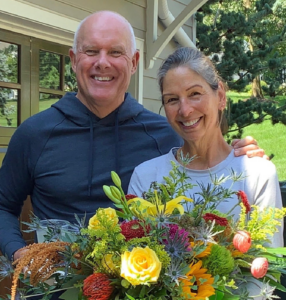
Matt and Lori Espe
For Matt and Lori Espe, supporting ECS comes naturally. They believe deeply in the coaching methodology to break the cycle of poverty.
Read more of their story
“Financially, it’s a great investment, and helping underserved communities is very much aligned with our family values,” Matt said.
Some twenty years ago, the Espes were introduced to ECS through service opportunities at the then emergency shelter St. Barnabas Mission. Their children got involved while attending Episcopal Academy.
Fast-forward to today, the Espes give their time, treasure, and talents in myriad ways. Matt is a member of ECS’ Board of Trustees and chairs the Advancement Committee. Lori, a health and wellness expert, provides coaching workshops to our team. As a unit, they donate generously because they believe deeply in the coaching methodology to break the cycle of poverty.
“One of our priorities as a family is making a positive impact for children and future generations” he said.
On Sundays at St. David’s, Radnor, the Espes find a sense of community in fellow parishioners. “Helping lift neighbors up is something we spend a lot of time talking about. And supporting ECS,…it’s very consistent with our faith, being able to put into practice these teachings,” Lori added. Through their involvement, the Espes are familiar faces on-site at ECS and in Zoom sessions. And their acquaintance brings connection.
“The staff is engaged and passionate, … they’re the real stars, helping people see their own talents and potentials,” said Matt. “It’s contagious and energizes this important work.”
Of that partnership and collaboration fostered between staff, board, and program participants, Matt said, “That’s how you maintain viability … even after 150 years. If you’re going to continue being effective and relevant, that’s how you do it.”
“I just want to ensure that the city remains healthy, and I know from firsthand experience, that my gifts are a safe contribution that will do a lot of good.”
-Jill Fannon
Jill Fannon
Jill Fannon knows a thing or two about fiscal responsibility. After all, she served as senior director of finance at ECS from 2014 to 2021. She and her husband relocated to Florida, but they remain champions of our mission.
Read more of her story
“I came to ECS at the start of something remarkable,” Jill reflected. “The organization was homing in on a new strategy to challenge the root causes of poverty and its effects. The finance team got a close look inside the day-to-day of programmatic operations—to really understand program goals and the resources they need to achieve them.”
Jill’s support of ECS went far beyond her job description or the charitable donations she would make through the employee giving campaign. It’s the essence of what Executive Director David Griffith says—that this team is called to serve.
Jill worked hand-in-hand with staff and programs, volunteering to conduct mock interviews with workforce development participants and taking in paid summer interns through the citywide WorkReady initiative to give high schoolers work experience.
While now enjoying warmer weather year-round in Florida, she believes that brighter days are also in store for Philadelphia and the people ECS serves. She is still rooting for the home team, making a monthly recurring gift. “Just as participants’ small goals add up and are transformational over time, recurring support adds up to a lot, too,” Jill said.
“I just want to ensure that the city remains healthy, and I know from firsthand experience, that my gifts are a safe contribution that will do a lot of good.”
The Recurring Giving Circle is one way to support to our participants every step of the way.
These gifts are an efficient way to spread your giving throughout the year, sustaining our work in the dollar amount of your choice. Click here to learn more.

Join a Giving Society
Together we can do so much.
Join a community of people who share your passion for addressing the root causes of racism, inequality and poverty by becoming a member of one of our giving societies.